

Typically, before and after wisdom teeth removal, the question most people ask is how long after wisdom teeth removal can they eat without causing problems.
The honest answer is: you can usually start once the numbness has worn off, but what you eat and how you eat matters just as much as the clock. In the first week, the goal is to protect the blood clot that forms in the socket, because that clot acts like a natural dressing over the wound. If it’s disturbed, healing can be slower and a dry socket can develop.
Wisdom teeth removal recovery timeline: when eating usually changes
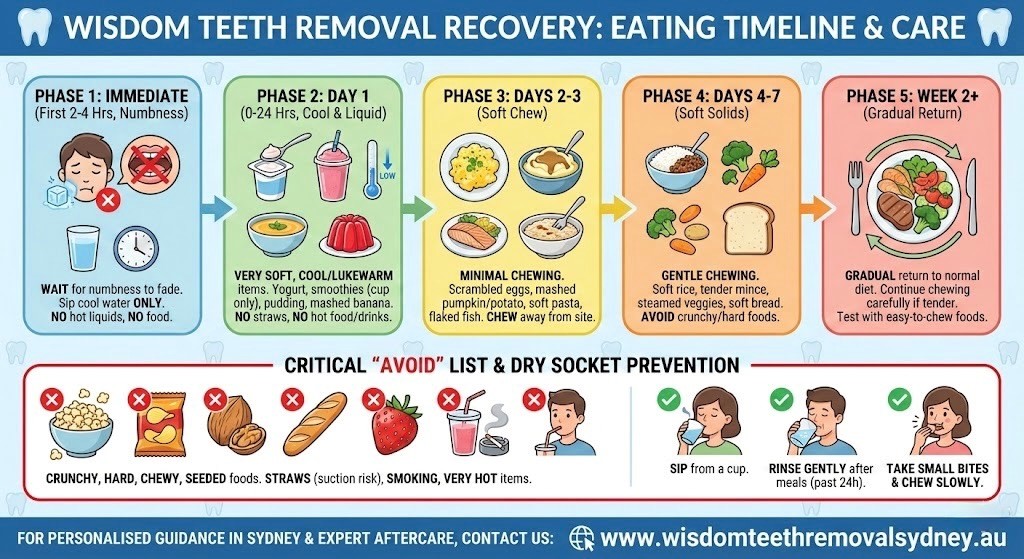
First 2–4 hours (and until numbness is gone):
Hold off on food until you can properly feel your lips, tongue and cheeks again. Eating too soon raises the chance of biting yourself without noticing. Once the anaesthetic wears off, start small. Cool water is fine, and many people find room-temperature foods easiest at this stage.
0–24 hours:
Stick to very soft, cool or lukewarm options after removing wisdom teeth. Think yoghurt, smoothies (sipped from a cup), puréed soups that aren’t hot, jelly, mashed banana, or a protein shake. Hot food and hot drinks are often discouraged on day one because heat can trigger bleeding again in a fresh socket.
Days 2–3:
This is when many people start to feel a little more human, even if swelling peaks around the second day. You can usually expand to soft foods that need minimal chewing: scrambled eggs, mashed pumpkin, soft pasta, well-cooked oats, or flaked fish. Keep chewing away from the extraction sites where possible.
Days 4–7:
If pain is settling and you’re not getting fresh bleeding, you can begin adding “soft solids” that need gentle chewing. Soft rice, mince cooked until tender, soft bread (not crusty), and steamed vegetables are common choices. Avoid anything hard or crunchy, and skip foods that easily lodge in the socket, such as nuts, seeds and popcorn.
Week 2 and beyond:
Many people are back to a fairly normal diet around this point, but it’s often a gradual return rather than a switch flicking overnight. If one side still feels tender, chew on the other side and wait a few more days before challenging it.
What to eat first (and what tends to cause trouble)
Early on, your mouth usually tolerates foods that are soft, smooth, and not too hot. Cold or room-temperature choices can feel soothing. By day two, warm foods are often fine, provided they’re not hot enough to sting.
Where people run into strife is texture. Crunchy snacks, crusty bread, and chewy lollies can knock the clot or scrape tender gum tissue. Seeded foods are another repeat offender because they can get stuck in the wound area.
A practical test: if you have to “work” at chewing it, it’s probably not the right time yet.
Dry socket prevention while eating after wisdom teeth extraction
Dry socket is a well-known complication where the blood clot is lost or doesn’t form properly, leaving the socket exposed and painful. Two habits trip people up: suction and irritation. That’s why many aftercare guides warn against using straws, because the sucking action can disturb the clot.
It’s also worth knowing that smoking increases complication risks after oral surgery, and some clinical guidance suggests avoiding smoking for at least 72 hours, longer if you can.
Eating habits that help:
- Sip drinks from a cup rather than a straw.
- Take smaller bites and chew slowly.
- Rinse gently after meals once you’re past the first 24 hours (more on that below).

The “clean but gentle” approach after meals
Food will sometimes collect near the extraction sites, especially when you start eating more textured foods. Many post-extraction instructions recommend waiting 24 hours, then using warm salt water rinses gently after meals, taking care not to swish hard.
If your clinic has given you a syringe for irrigation, follow their timing and method. Some surgeons prefer you don’t irrigate too early, particularly after difficult lower wisdom tooth removals.
If you’re in Sydney and want guidance tailored to your case, wisdom teeth removal providers can advise on when to progress textures, especially if you had impacted teeth or a history of dry socket.
Also Read: How to Brush Your Teeth After Wisdom Teeth Removal – An Expert Guide
Frequently Asked Questions:
1. How long after wisdom teeth removal can I eat solid food?
Most people start with liquids and very soft foods on day one, then move to soft solids over the next several days. Hard, crunchy foods are usually the last to return because they can irritate the wound or get stuck. The NHS advises avoiding hard or crunchy foods that could lodge in the area, such as nuts or seeds, during early healing.
2. When can I eat normally after wisdom teeth removal?
“Normal” varies. Some people feel ready around the end of week one, while others need closer to two weeks, especially after impacted removals. Comfort is a useful guide: if chewing triggers sharp pain or bleeding, scale back to softer foods and try again later.
3. What can I eat 3 days after wisdom teeth removal?
Day three often suits foods that are soft but more filling: scrambled eggs, mashed vegetables, porridge, soft pasta, and flaked fish. Keep meals lukewarm rather than hot, and avoid foods with seeds that can lodge in the socket.
4. When can I use a straw after wisdom teeth removal?
Many reputable aftercare sources advise avoiding straws because suction can disturb the clot and raise dry socket risk. A South Australian public dental advice sheet specifically warns against straws after extraction for this reason. Waiting at least a week is a common conservative approach, but follow your clinician’s instructions.
5. What should I do if food gets stuck in the extraction site?
Don’t poke at the socket with fingers, toothpicks, or hard tools. After the first 24 hours, gentle warm saltwater rinses after meals can help clear debris without forceful swishing. If you were given a syringe, use it only as directed. If you get worsening pain, swelling, or a bad taste that doesn’t settle, contact your dentist.