
If you’re weighing up wisdom teeth removal, it’s easy to get stuck on stories that are out of date or simply wrong. Modern assessment, anaesthesia, and aftercare have changed what most people experience. This article unpacks seven persistent myths, explains what’s actually typical, and outlines what to watch for during recovery so you can plan with a clearer head.
TL;DR: Key takeaways
- Not everyone needs extraction; monitoring can be reasonable when teeth are healthy and accessible to clean.
- Pain control is planned, not left to luck. Many procedures are done with local anaesthetic, with sedation options for suitable patients.
- Swelling often peaks around days 2 to 3 and then settles.
- Dry socket is uncommon but real. If intense pain starts 1 to 5 days after extraction, call your dentist.
- Eating and cleaning are possible sooner than most people think, with a few sensible rules.
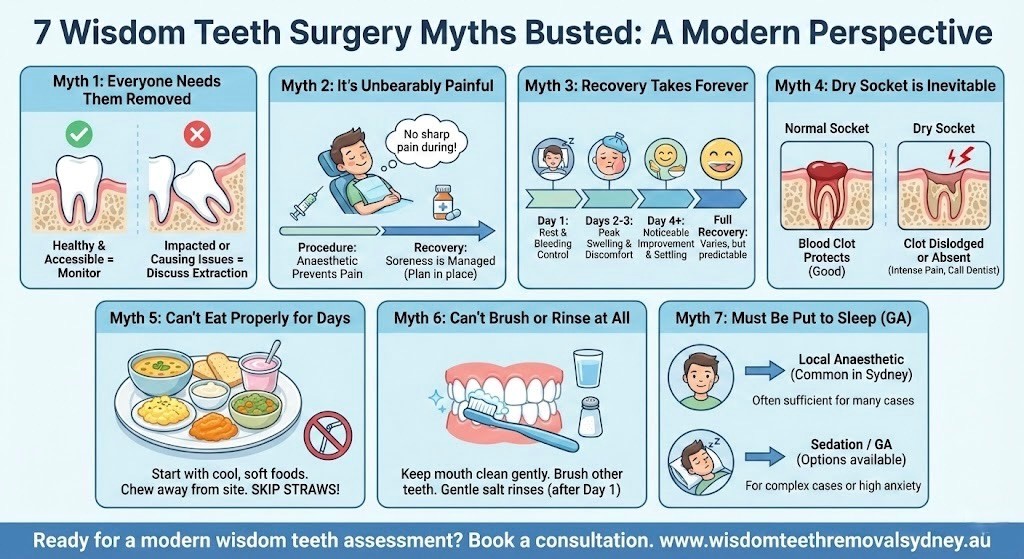
Myth 1: “Everyone needs their wisdom teeth removed”
Reality: Some third molars behave themselves. Others don’t. The decision usually comes down to position, symptoms, and whether the area can be kept clean.
Why it matters: A back tooth that’s angled or partly trapped can collect food and bacteria. That can lead to infection, decay, or damage to the neighbouring tooth.
What we recommend: A proper assessment with X-rays and a discussion about risks versus benefits. If a tooth is causing trouble or likely to, your clinician may recommend impacted wisdom teeth removal.
When to call your dentist: Pain, swelling, bad taste, recurrent gum infections, or difficulty opening your mouth are all worth checking sooner rather than later.
Myth 2: “Wisdom teeth surgery is unbearably painful”
Reality: During the procedure you should not feel sharp pain. After the anaesthetic wears off, soreness is expected, but it’s usually manageable with a clear plan.
Why it matters: Fear can delay care until symptoms flare, which may mean a more urgent (and stressful) appointment.
What we recommend: Ask what type of anaesthetic is suitable and how pain will be managed at home. For anxious patients or complex cases, sedation for wisdom teeth removal may be an option. Many extractions can be done with local anaesthetic; deeper impactions may be offered other approaches, including hospital-based care in selected situations.
When to call your dentist: Pain that keeps worsening after initial improvement, especially if paired with bad breath or a foul taste.
Myth 3: “Recovery takes forever”
Reality: Most people improve in a steady, predictable pattern. The first few days are usually the peak discomfort window, then it eases.
Why it matters: People often plan too much downtime, or the opposite, and return to full activity too soon.
What we recommend: Use a simple wisdom teeth recovery timeline as a guide: day 1 is about bleeding control and rest; days 2 to 3 are often the puffiest; by day 4 many people feel noticeably better, even if they still chew cautiously. Swelling commonly peaks on the second day and starts settling from the third.
When to call your dentist: Fever, increasing swelling after the first few days, or bleeding that doesn’t slow with pressure.
Myth 4: dry socket symptoms and treatment
Reality: Dry socket can happen, but it’s not inevitable. It occurs when the blood clot that should protect the socket doesn’t form properly or is dislodged, leaving the area exposed.
Why it matters: The pain is not “normal soreness”. People sometimes wait it out, then end up suffering longer than they need to.
What we recommend: Follow aftercare advice closely, especially around smoking and vigorous rinsing. If you develop severe throbbing pain a few days after extraction, contact the clinic. Pain may start within 1 to 5 days and can be severe, sometimes radiating to the ear or eye on the same side.
When to call your dentist: Intense pain starting after a brief improvement, bad breath, unpleasant taste, or fever.
Myth 5: “You can’t eat properly for days”
Reality: You can eat, but you’ll eat differently for a short while.
Why it matters: Under-eating can make you feel shaky, slow recovery, and make pain harder to tolerate.
What we recommend: Start with cool, soft foods (yoghurt, soups that have cooled, scrambled eggs, mashed veg). Chew away from the extraction sites. Skip straws early on because suction can disturb the clot. If you’re unsure, ask for a printed food guide before you leave.
When to call your dentist: If you cannot keep fluids down, or you notice increasing pain with eating that doesn’t settle.

Myth 6: “You can’t brush or rinse at all”
Reality: Keeping your mouth clean is part of healing. The trick is doing it gently.
Why it matters: Plaque and food debris irritate healing tissue and can worsen breath and discomfort.
What we recommend: Brush the rest of your teeth as normal, and be careful around the surgical area. Your clinician may suggest salt-water rinses after the first day, done softly rather than forcefully.
When to call your dentist: Persistent bad taste, discharge, or swelling that’s getting worse rather than better.
Myth 7: “You must be put to sleep”
Reality: Many people do not need a general anaesthetic. In Sydney, local anaesthetic is often enough. Deeper impactions or medical factors may change the recommendation.
Why it matters: Patients sometimes assume they must book a hospital and postpone care, when a chairside option could be appropriate.
What we recommend: Discuss options in plain language: what you’ll feel, how long it takes, and how you’ll get home safely. A good plan also includes clear instructions for the first night, when most people are tired and not keen on reading fine print.
When to call your dentist: If you feel unwell after sedation or have concerns about your medications and aftercare instructions.
When removal is recommended
Extraction is commonly advised when wisdom teeth are impacted or hard to clean, when repeated infections occur, or when decay threatens the tooth in front. Impacted wisdom teeth may contribute to infection, pain, cysts, ulcers, and decay around the area.
Warning signs after surgery
Contact your dentist promptly for severe pain that starts a few days later, increasing swelling after the early peak, fever, uncontrolled bleeding, or a bad taste that suggests infection.
Choosing a clinic
Look for clear explanations, transparent aftercare, and a contact pathway if symptoms change outside business hours. If you’re arranging a wisdom teeth consultation in Sydney, check travel and parking, especially if sedation is planned and you’ll need a support person.
Also Read: Are All Wisdom Teeth Problematic? What You Need to Know
Frequently Asked Questions:
1) Do all wisdom teeth need to be removed?
No. Some third molars erupt in a position that stays healthy and cleanable. Problems are more likely when the tooth is angled, partly trapped under gum, or hard to brush properly. A dentist usually decides based on symptoms, examination, and X-rays. If the tooth is trouble-free, monitoring can be reasonable.
2) How long does wisdom tooth recovery usually take?
Most people feel the worst in the first few days, then improve steadily. Swelling often peaks around day 2 and begins easing from day 3. Some jaw stiffness can linger into the second week, particularly after more complex removals. Rest, cold packs early on, and sensible meals make a noticeable difference.
3) What are the signs of dry socket?
Dry socket pain is typically intense and throbbing, and it often starts 1 to 5 days after the extraction. People may also notice bad breath, a foul taste, or pain that radiates to the ear on the same side. If you suspect it, ring your dentist rather than trying to push through.
4) Can I eat normally after wisdom teeth surgery?
You can eat, but start with soft foods and avoid crunchy or sharp items that can lodge in the area. Chew away from the extraction site and keep food lukewarm or cool at first. Your clinician may advise avoiding straws early on to protect the blood clot. Most people return to a normal diet as tenderness settles.
5) Do I need sedation for wisdom teeth removal?
Not always. Local anaesthetic may be all that’s required, while deeply impacted teeth or other medical reasons can lead to different options, including general anaesthetic in some cases. Your dentist or surgeon will weigh up complexity, anxiety levels, and medical history before recommending an approach.