

The first week after wisdom teeth removal sets the tone for the rest of your recovery. If you want to heal faster after wisdom teeth removal, the aim is simple: protect the blood clot, keep the area clean without disturbing it, and give your body the right conditions to repair.
Wisdom teeth recovery timeline day-by-day
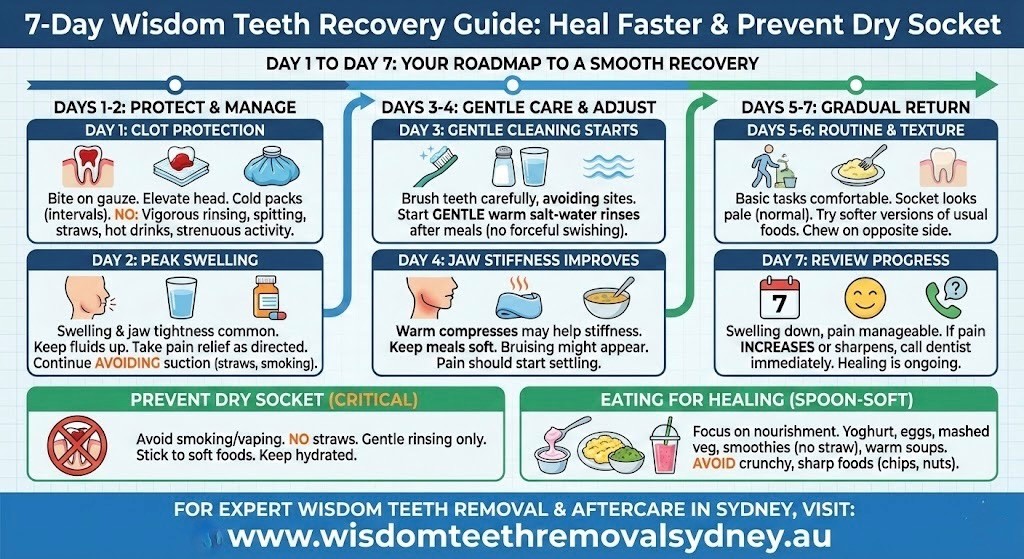
Day 1: Protect the clot and settle bleeding
- A bit of oozing is common in the first day. Apply gentle pressure by biting on gauze as instructed, and keep your head elevated when resting.
- For the first 24 hours, avoid anything that can pull the clot loose: no vigorous rinsing, no spitting, no straws, and skip hot drinks.
- Dentists also advise holding off on mouthwash and strenuous activity on the first day.
- Cold packs on the cheek can help keep swelling down. Use short intervals (for example, on and off) and give your skin breaks so it doesn’t get irritated.
Day 2: Swelling often peaks
Day 2 can feel a touch worse than Day 1. Swelling and jaw tightness are common, especially after surgical or impacted removals.
Keep fluids up, take pain relief as directed, and continue to avoid suction actions (straws, smoking, vaping), which are strongly linked with dry socket risk.
Day 3: Gentle cleaning starts to matter more
By Day 3, bleeding should be minimal. You can usually brush the rest of your teeth normally, staying cautious around the extraction sites so you don’t bump stitches or the clot. Many services advise starting gentle warm salt-water bathing/rinsing from the day after surgery, especially after meals, but keep it light rather than a forceful swish.
Day 4: Stiff jaw and mouth opening improve
If your jaw feels stiff, warm compresses may feel better than ice at this point. Keep meals soft and manageable. People often notice bruising looks more obvious around now, even as pain begins to settle.
Day 5: A more predictable routine return
Most people can do basic daily tasks comfortably by Day 5, though chewing may still be awkward. The socket can look pale or slightly yellow as it heals, which isn’t automatically a problem. Pay more attention to trends than single moments. Pain that steadily improves is reassuring, but pain that ramps up late in the week needs a check.
Day 6: Gradually test texture, not speed
You might feel ready to “eat normally” again, but the healing socket is still vulnerable. Try softer versions of usual foods and chew on the opposite side if one area is tender.
Day 7: Review your progress and know when to call
By a week, swelling is usually down and pain should be much easier to manage. If your pain is getting sharper rather than calmer, or you’ve got a bad taste plus increasing tenderness, ring your dentist or oral surgeon for advice.
How to prevent dry socket after wisdom teeth removal
Dry socket happens when the protective clot doesn’t form well or gets dislodged, leaving the bone and nerves exposed. It’s known for pain that can feel out of proportion and may start a few days after the extraction.
Avoid smoking or vaping, avoid straws, and keep rinsing gentle so you don’t wash the clot away. Soft foods and steady hydration also help.

Eating, drinking, and rinsing without making things worse
Food choices can either support healing or irritate the sites. Think nourishment first, chewing second. A simple rule is to start with spoon-soft meals and only add texture once chewing feels comfortable.
If you are wondering what to eat after wisdom teeth removal, consider yoghurt, scrambled eggs, mashed veg, well-cooked pasta, smoothies taken without a straw, and soups that are warm rather than hot. Avoid crunchy bits (chips, nuts, toast corners) that can jab the socket.
For rinsing, several dental and hospital resources recommend warm salt-water bathing from the day after extraction, often after meals, with care not to swish aggressively.
Also Read: Dos and Don’ts in the First 24 Hours After Wisdom Teeth Removal
Frequently Asked Questions:
1) When does swelling peak after wisdom teeth removal?
Swelling often peaks around Day 2, sometimes into Day 3, then steadily eases. Cold packs are commonly used early to limit swelling, and many people switch to warmth later when stiffness is the main issue. If swelling keeps increasing after the third day, call your clinician.
2) When can I start salt-water rinses?
Experts suggest starting the day after the extraction. Keep it gentle: hold warm salt water near the site briefly and let it fall out, rather than swishing hard. This helps keep the area cleaner without knocking the clot loose.
3) How do I know if I have dry socket?
Dry socket often causes worsening pain a few days after surgery, sometimes with a bad taste or smell, and pain that may radiate to the ear or jaw. If pain is getting stronger instead of fading, especially after Day 3 to 5, contact your dentist for assessment and relief.
4) When can I use a straw or smoke again?
Experts advise avoiding straws for at least a week because suction can dislodge the clot. Tobacco use also raises dry socket risk and slows healing. If you smoke or vape, speak with your dentist about the safest timing for you, as advice can vary by case.
5) When can I go back to exercise or work?
Light activity is often fine after the first day if you feel up to it, but hard training can increase bleeding or throbbing. Dentists recommend avoiding strenuous activity for the first 24 hours. If your job is physically demanding, it’s reasonable to plan a slower return.
General information only. For personalised advice, follow your treating dentist’s instructions or contact a qualified provider in Sydney.