

A sore wisdom tooth can be easy to dismiss at first. For many people, the early signs of wisdom teeth coming in are mild: pressure at the back of the mouth, a tender gum line, and a bit of irritation when chewing. The picture changes when pain becomes stronger, swelling lingers, or a bad taste appears. Partially erupted or trapped third molars are harder to clean, which means food and bacteria can collect around the gum and trigger infection, often called pericoronitis. Lower wisdom teeth are especially prone to this because they commonly erupt later and are more likely to be impacted.
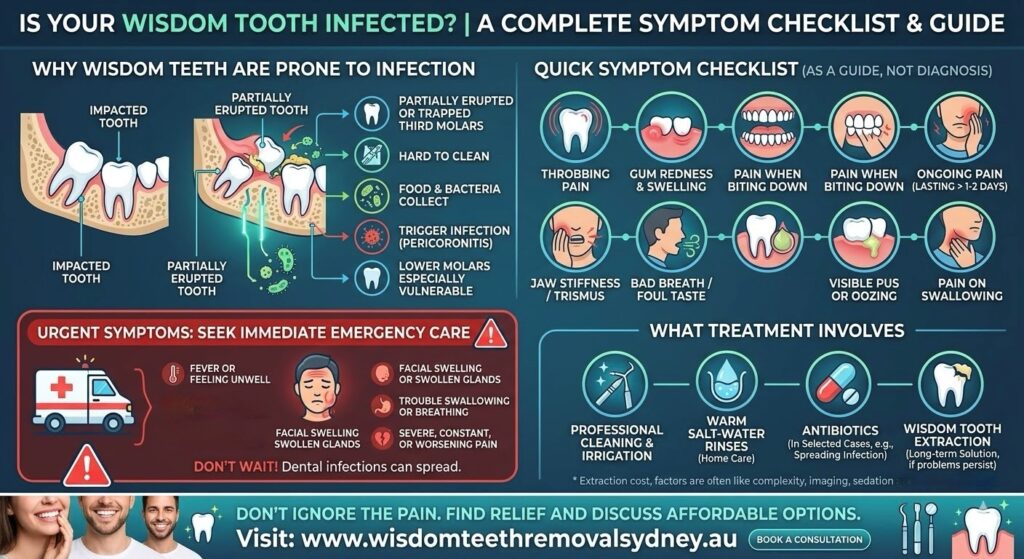
Quick symptom checklist
Use this list as a guide, not a diagnosis. A dental exam is still the best way to confirm what is going on.
- Persistent wisdom tooth infection symptoms such as throbbing pain, gum redness, swelling, or pain when biting down may point to inflammation around the tooth.
- Ongoing wisdom teeth pain that lasts more than a day or two deserves attention, especially if it is getting worse rather than easing.
- A swollen gum flap, trapped food, or difficulty cleaning the very back molar area can set the scene for infection.
- Bad breath, foul taste, or visible pus are warning signs that bacteria may already be active around the tooth.
- Jaw stiffness, pain when opening the mouth, facial swelling, fever, or pain on swallowing suggest a more serious problem and should not be put off.
What makes wisdom teeth more likely to become infected?
An impacted wisdom tooth is one that does not erupt properly and may stay partly trapped in the gum or jawbone. Some impacted teeth do not cause symptoms, though others lead to pain, swelling, and infection. Partly erupted teeth are particularly troublesome because a small flap of gum can sit over the crown, creating a spot where plaque and food collect. That is one reason dentists often keep a close eye on wisdom teeth with limited room.
Not every painful wisdom tooth is infected. Decay, gum disease, pressure on nearby teeth, or an abscess can also be responsible. Still, repeated gum infections around a wisdom tooth are one of the common reasons removal is discussed.
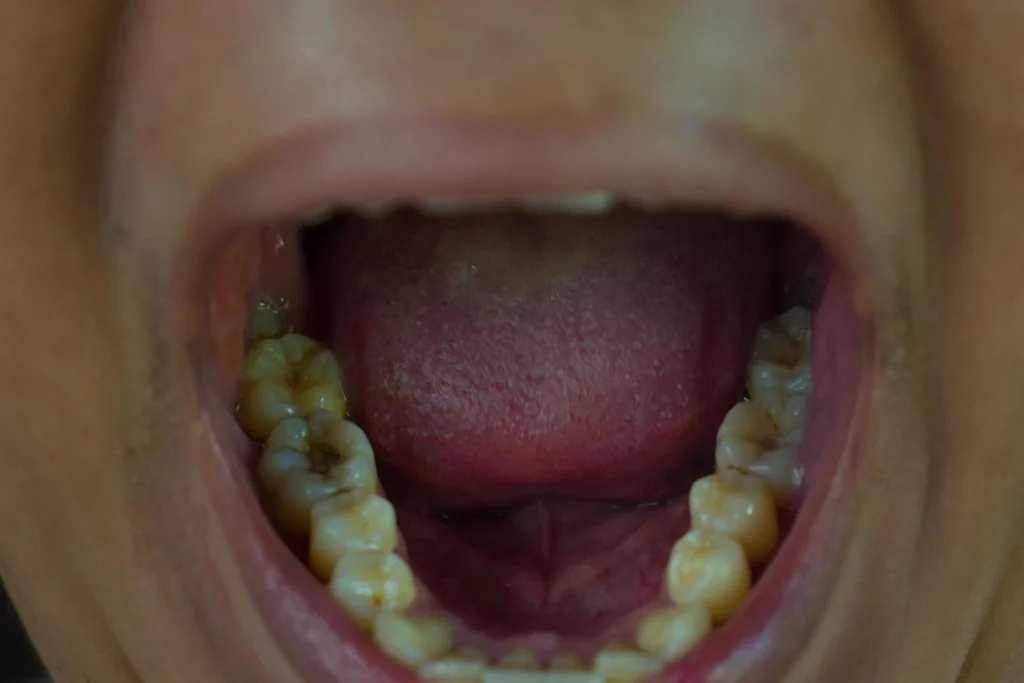
What infection can look and feel like
A local infection often begins with tenderness behind the last molar. The gum may look red and puffy, and brushing that area can be unpleasant. Some people notice pain spreading into the jaw, ear, or side of the head.
If the infection deepens, the area may ooze, taste unpleasant, or develop a visible swelling in the cheek. Fever, swollen glands, trismus, or trouble swallowing are signs that the problem may be moving beyond a simple irritated gum flap.
Remember, pain does not always match the severity of the problem. A wisdom tooth can be only mildly sore yet still trap debris and inflame the gum over weeks. On the other hand, sharp, escalating pain with facial swelling is more urgent.
If breathing or swallowing becomes difficult, emergency care is needed because severe dental infections can spread into deeper tissues.
What treatment usually involves
The right wisdom tooth infection treatment depends on the cause and the extent of the infection.
A dentist may clean the area, irrigate under the gum flap, and advise measures such as warm salt-water rinses and gentle cleaning.
Antibiotics may be used in selected cases, especially when there is spreading infection, fever, or facial swelling, though they do not fix the underlying issue on their own. If the tooth keeps causing trouble, wisdom tooth extraction may be recommended as the longer-term answer.
People often ask whether they should wait it out. That can be risky. An abscess or gum infection around a wisdom tooth will not reliably settle without proper care, and repeated flare-ups are common when the tooth is hard to clean or partly trapped.
Also Read: How Wisdom Teeth Removal Reduces the Risks of Oral Infections
When to seek urgent help
Contact an emergency dentist for wisdom tooth pain promptly if you have any of the following:
- Fever or feeling generally unwell
- Facial swelling or swollen glands
- Pus, foul discharge, or a bad taste that keeps returning
- Trouble swallowing or opening your mouth
- Pain that is severe, constant, or worsening fast
If removal is advised, the wisdom tooth extraction cost can vary according to whether the tooth is fully erupted or impacted, how many teeth need treatment, the complexity of surgery, imaging, and whether sedation is used. Clinics may also differ in fees, so it is sensible to ask for a written quote and discuss payment options if you are comparing affordable wisdom tooth removal services.
If your symptoms point to an infected or impacted wisdom tooth, booking an early assessment can prevent a painful problem from getting worse. Contact Wisdom Teeth Removal Sydneyto discuss your options for prompt care, wisdom tooth extraction, and practical guidance on treatment costs.
Frequently Asked Questions:
1. How to tell if wisdom tooth is infected?
A wisdom tooth may be infected if the pain is getting worse, the gum is red or swollen, or the area produces a bad taste or pus. Many people also notice pain when chewing, a stiff jaw, or swelling in the cheek. Mild pressure from eruption can be normal, but fever, facial swelling, or trouble swallowing are stronger signs that a dentist should assess the tooth soon.
2. Can a wisdom tooth infection make you sick?
Yes. Dental infections can cause fever, swollen glands, malaise, and facial swelling. In more serious cases, infection can spread into nearby tissues and become a medical emergency. That is why symptoms such as fever, increasing swelling, or difficulty swallowing should never be brushed off.
3. What does an infected wisdom tooth look like?
The tooth itself may not look dramatically different, though the gum around it often does. Common signs include redness, puffiness, a flap of swollen gum, trapped food, and sometimes visible discharge. If an abscess is present, the area may look swollen and feel tender to touch.
4. Can wisdom tooth pain cause headaches?
It can. Pain from the back of the jaw may radiate into the ear, temple, or side of the head, especially if the surrounding muscles are tense or the jaw is stiff. A headache on its own does not prove infection, though pain that spreads with swelling or gum inflammation deserves a dental check.
5. How long does wisdom tooth infection last?
It varies. A mild flare-up may settle temporarily, but the infection can return if the tooth remains hard to clean or partly erupted. An abscess will not usually get better on its own, and repeated infections are common when the underlying problem is still there. Prompt assessment usually shortens the course and lowers the risk of complications.