

Not all wisdom tooth pain means trouble, but some of it absolutely does, and the hard part is telling the two apart at the moment it matters. The third molars usually arrive in the late teens or early twenties, the last teeth to push through, often into a jaw that ran out of room years ago. Some erupt cleanly and never bother anyone. Others get stuck, tilt sideways, or surface only halfway.
That is where the problems start. A tooth that cannot fully emerge traps food and bacteria, presses on its neighbour, or sits half-covered by a flap of gum, and any of those can turn a dull ache into something that needs a dentist. Knowing which signs point to a real problem, and how fast to act on them, is what keeps a manageable issue from becoming an urgent one.
When a twinge is just a twinge
A few days of soreness at the very back of the mouth is normal as a tooth breaks through. Mild pressure, tender gums when you brush, a dull throb that fades. It eases on its own.
What should get your attention is pain that keeps coming back, climbs in intensity, or brings company: facial swelling, a sour taste, a jaw that won’t open all the way. Those are not teething pains. They are the tooth telling you something is trapped or infected back there.
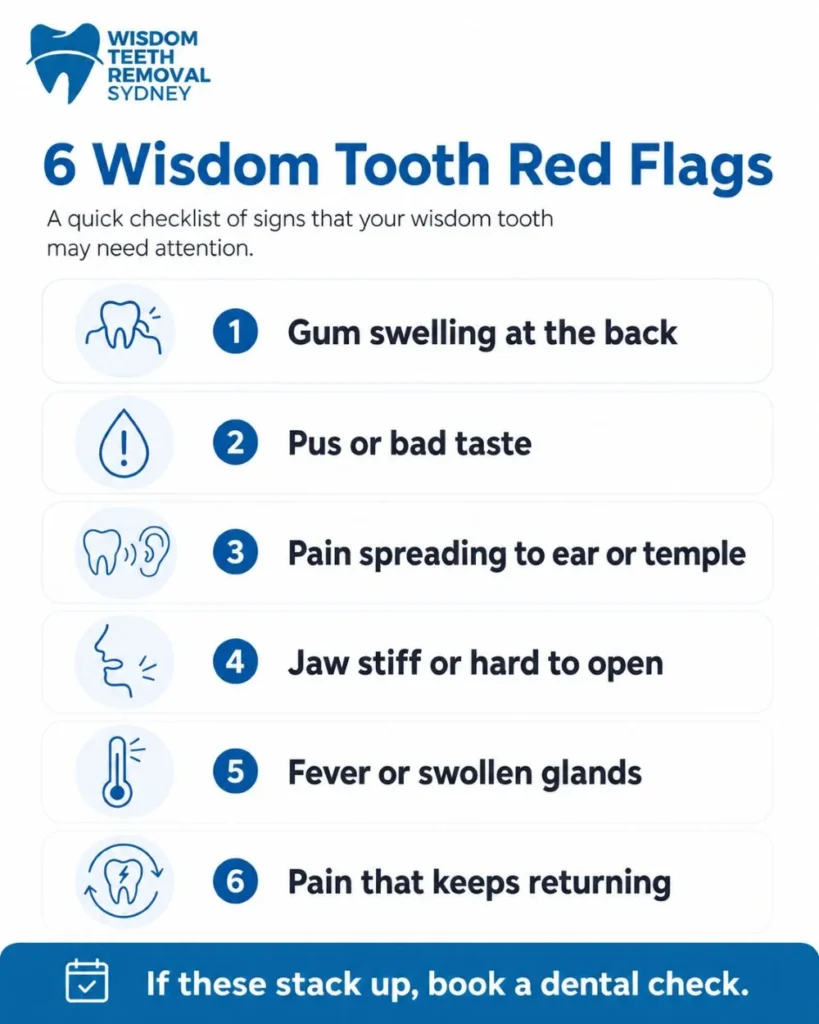
The red flags: signs of wisdom teeth infection
A partially erupted wisdom tooth leaves a flap of gum sitting over the crown, and that flap traps food and bacteria. The result is pericoronitis, the single most common reason a wisdom tooth turns into an emergency. It is overwhelmingly a young adult’s problem; roughly four in five cases occur in people in their twenties.
The signs of wisdom teeth infection tend to run in a predictable sequence: redness and swelling around the back gum, a foul taste or visible pus, and pain that radiates toward the ear, jaw or temple. Add a fever or tender, swollen glands under the jaw and the clock starts moving faster.
Then there is the line you do not want to cross. Swelling that spreads across the face, or any difficulty swallowing or breathing, is not a “book next week” problem. That is the emergency department, tonight. Infection in this corner of the head can travel into the neck, and in rare cases it becomes life-threatening.
When to see a dentist for wisdom teeth: a quick triage
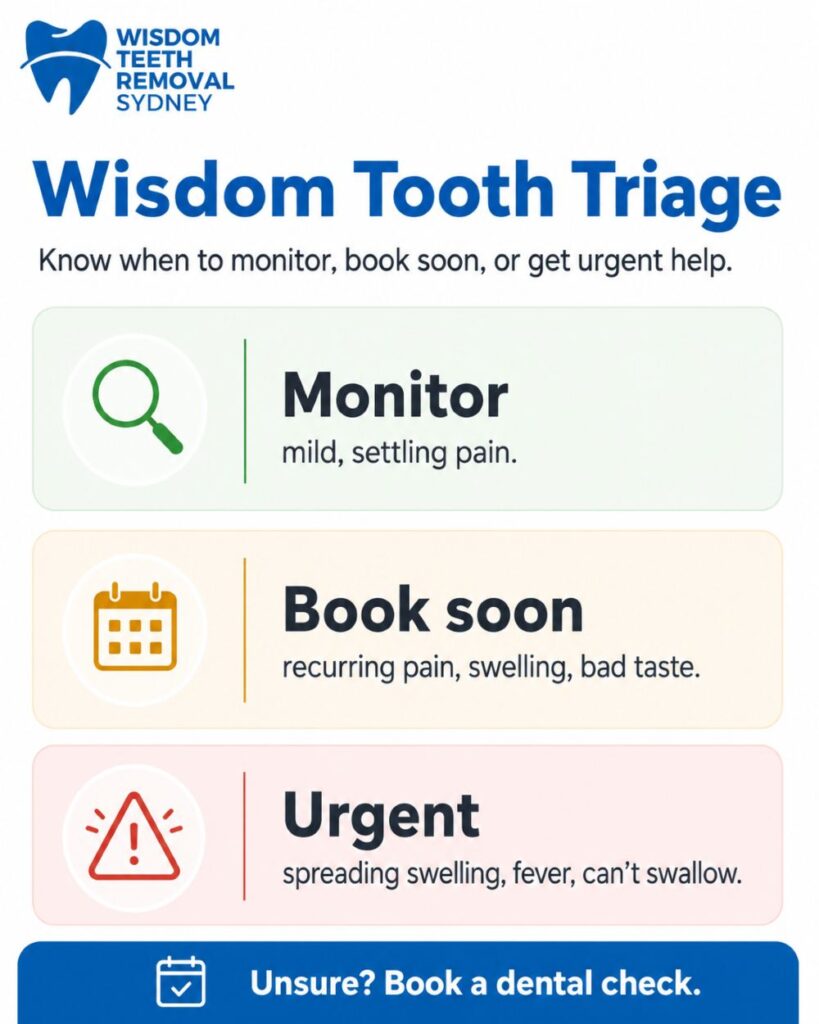
So when to see a dentist for wisdom teeth, and how urgently? A rough guide:
| Situation | What it looks like | What to do |
| Monitor | Brief tenderness as a tooth erupts, settling within days | Keep the area clean, watch it |
| Book soon | Recurring pain, mild swelling, bad taste, pressure on nearby teeth | Dental assessment within a few days |
| Urgent | Spreading facial swelling, fever, stiff jaw, trouble swallowing | Same-day or emergency care |
Wait or act? The trade-offs
Not every wisdom tooth needs to come out. Some sit quietly for a lifetime. The catch with impacted wisdom teeth is that “quietly” can change without much notice. Left alone, an impacted tooth can drive infection, decay in the molar next door, gum disease, or, less often, a cyst that damages bone.
One pattern tends to settle the argument: a tooth that flares, calms down, then flares again weeks later. Each repeat episode raises the odds of the next one, and recurring infection in the same spot is a standard reason dentists shift from watching to removing.
The case for waiting is real too. Removal is surgery, with the cost and the few days of recovery that come with it. Lower wisdom teeth sit close to the nerves that supply the lip and tongue, so there is a small chance of numbness, usually temporary. On balance the maths tends to favour earlier rather than later: the procedure is technically easier and healing is quicker in your twenties than at forty.
One myth worth retiring. There is no good evidence that wisdom teeth shove your other teeth out of line. If removal is recommended, it should be about infection, impaction or damage risk, not crooked front teeth.
What happens when you finally go
The visit itself is undramatic. A dentist examines the area and usually takes a panoramic X-ray, an OPG, to see how the roots sit and how close they run to the nerve. From there it is either a simple extraction or, for buried or angled teeth, surgical removal under local anaesthetic, sedation or general anaesthetic. You will know what removal costs and what recovery looks like before anything is booked. Most people are back to normal within a week or two, faster for simple extractions, and you can read through the common questions on the FAQ page if you want the detail first.
Don’t let the swelling decide for you
If your jaw has been sending signals, there is no prize for waiting out the next 2am flare. Wisdom Teeth Removal Sydney offers a free consultation with no wait time in the Sydney CBD, so you can find out exactly what is going on and weigh your options properly. Book your assessment online and get a clear answer before the pain makes the call for you.