

After wisdom teeth surgery, your food should do two jobs: keep you nourished and avoid disturbing the healing socket. Experts generally recommend soft foods, chewing on the other side of the mouth, avoiding rinsing for the first 24 hours, and watching for signs such as worsening pain, fever, or swelling that does not settle. The wound often takes up to two weeks to heal, though diet usually becomes easier well before that. If you are wondering what to eat after wisdom teeth removal, this meal plan is for you.
Why food choices matter
- Soft foods reduce rubbing and pressure on the extraction site.
- Cooler or lukewarm foods are often more comfortable than very hot meals.
- A steady intake of protein, fluids, and energy helps recovery when chewing is awkward.
- Hard, crunchy, spicy, or acidic foods can irritate the area or leave particles in the socket.
First 24 hours: Keep it simple
This is the stage when most people feel swollen, sore, or still a little numb. A sensible rule is to choose foods you can swallow with very little chewing.
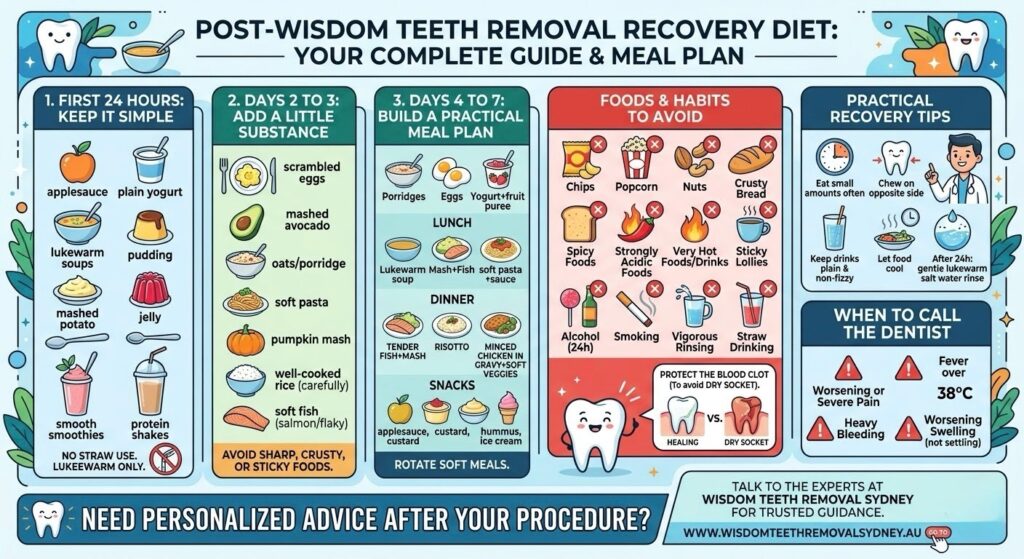
- Applesauce
- Plain yoghurt
- Smooth soups served lukewarm, not hot
- Pudding or custard
- Mashed potato
- Jelly
- Smooth smoothies eaten with a spoon, not through a straw
- Cottage cheese or soft ricotta
- Protein shakes sipped from a cup
Cold or room-temperature foods are often easiest on the mouth during the first day.
Days 2 to 3: Add a little substance
By the second or third day, many people can move on from fully smooth foods to soft meals that still do not need much chewing.
- Scrambled eggs
- Porridge or oats softened well
- Avocado, mashed with a fork
- Soft pasta
- Pumpkin mash
- Well-cooked rice if it feels comfortable and does not get trapped
- Soft fish that flakes easily
- Blended lentil or vegetable soup
At this point, your wisdom teeth recovery diet should still avoid anything sharp-edged, crusty, or sticky. Even when you feel better, the area is still healing underneath.
Days 4 to 7: Build a practical meal plan
A full week of soup gets old quickly. A better approach is to rotate soft meals, so you get enough protein and energy.
Breakfast
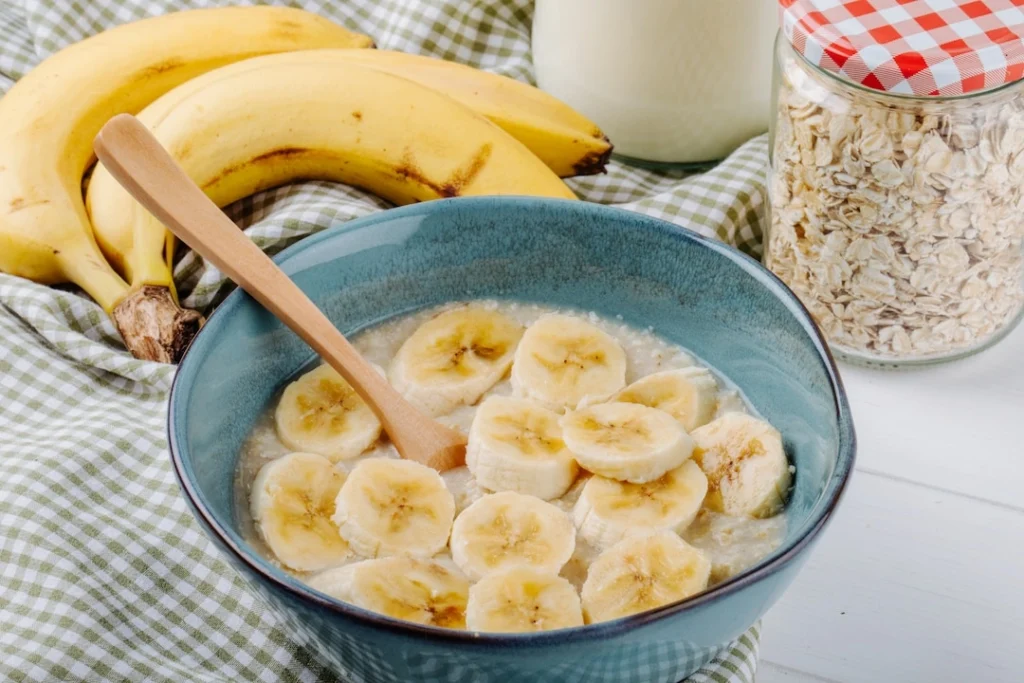
- Porridge with mashed banana
- Soft scrambled eggs
- Yoghurt with smooth fruit puree
Lunch
- Pumpkin or tomato soup served lukewarm
- Mashed potato with flaked salmon
- Soft pasta with a smooth sauce
Dinner
- Tender fish with mashed sweet potato
- Risotto cooked until very soft
- Minced chicken in gravy with soft vegetables
Snacks
- Applesauce
- Custard
- Cottage cheese
- Smooth hummus without crackers
- Ice cream without nuts, chunks, or cones
These are reliable soft foods for wisdom teeth because they are easy to manage, less likely to scratch the gum, and easy to portion into small meals when your appetite is patchy.
Foods and habits to avoid
For the first several days, steer clear of:
- Chips, popcorn, nuts, crusty bread, and toast
- Spicy foods and strongly acidic foods
- Very hot food and drinks
- Sticky lollies and chewy foods
- Alcohol in the first 24 hours
- Smoking
- Vigorous rinsing
- Drinking through a straw
The reason for the caution is the blood clot in the socket. It protects the area while it heals during wisdom teeth recovery. If it comes away too early, you can end up with dry socket, which is painful and may need dental treatment. Healthdirect advises avoiding straws because suction may disturb that clot, though research on the exact level of risk from straws alone is limited.
Also Read: Dos and Don’ts in the First 24 Hours After Wisdom Teeth Removal
A few practical tips
- Eat small amounts more often instead of forcing large meals.
- Chew on the opposite side if your dentist has advised it.
- Keep drinks plain and non-fizzy at first.
- Let food cool before eating.
- After 24 hours, rinse gently with lukewarm salt water if your dentist recommends it.
- Call your dentist if pain becomes severe, bleeding is heavy, you develop a fever over 38°C, or swelling worsens rather than improves.
Frequently Asked Questions:
- How soon can I eat solid food after wisdom teeth removal?
Most people start with liquids and very soft foods for the first 24 to 48 hours, then move to soft solids over the next few days. A more normal diet usually returns gradually as comfort improves, but healing of the wound can take up to two weeks. - Can I eat spicy food after oral surgery?
It is best to avoid it early on. Spicy foods can irritate a tender mouth and make eating less comfortable, especially in the first few days. - Why can’t I use a straw after tooth extraction?
The concern is suction. Many clinicians advise skipping straws because the pulling action may dislodge the blood clot and raise the chance of dry socket. - Is dairy okay to eat after dental surgery?
Usually, yes. Yoghurt and similar foods are commonly suggested because they are soft and easy to eat. A review of the evidence found no good support for routinely avoiding dairy after oral surgery, though some people may prefer to limit it if it worsens nausea. - When should I call the dentist?
Get advice if pain becomes worse instead of better, bleeding is heavy, you have a fever, or swelling keeps increasing. Those signs can point to a complication that needs review.
The best post-surgery menu is not fancy. It is soft, steady, and easy on the mouth. Stick with gentle meals, add texture slowly, and follow your dentist’s aftercare advice. That usually makes the first week far more manageable.
Need personalised advice after your procedure? Talk to the experts of Wisdom Teeth Removal Sydney for trusted guidance on recovery, aftercare, and when to seek follow-up support.